


Signs of osteoarthritis of the knee joint are often found in older people.Athletes and obese patients are also at risk.
Why does osteoarthritis of the knee joint occur?
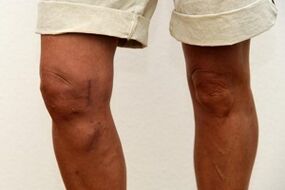
Osteoarthritis is the deformation of the cartilage of the joints.Cartilage plays the role of a shock absorber and facilitates the movements of the human body.When they are destroyed, mobility gradually decreases and any load causes pain.Over time, the knee becomes completely immobilized and the person may become disabled.
All cartilage thins and wears away with age, so the disease in different stages occurs in 70-85% of people over 60 years of age.First of all, these are overweight women.Other common causes of osteoarthritis:
- Intense sports and physical overload contribute to premature cartilage wear at an early age.
- Injuries, fractures, dislocations.
- Genetic predisposition.
- Congenital disorders, lack of intra-articular fluid.
- A circulatory disorder in which the cartilage receives little oxygen and nutrients.
- Joint diseases accompanied by inflammation.
- Violation of hormone production and metabolism.
A type of osteoarthritis that affects the knee joint is called gonarthrosis, from the ancient Greek "goni" - knee.
Classification of osteoarthritis of the knee joint.
In this condition, 3 stages are distinguished, depending on the degree of development of osteoarthritis.The earlier the disease is detected, the more successful and easier the treatment will be.Characteristics of the different stages of osteoarthritis:
- At this stage, bone deformation is not pronounced.Deviations are noticeable on x-rays, but few people pay attention to minor symptoms and go to the doctor.
- Bone changes and thickening are visible to the naked eye on x-rays.Quality of life decreases due to constant discomfort.
- The patient has significantly limited movement.The ligaments and cartilage are completely destroyed.
Many elderly people endure pain until the last moment and suffer from illnesses because they become accustomed to age-related illnesses and consider these symptoms normal.However, at the initial stage it can be managed with conservative methods, and at the last stage only surgery will help.
Main symptoms
The disease does not start suddenly, but rather develops over several years.At first, a slight pain in the knee is only felt under heavy loads, when going up and down stairs.If osteoarthritis is left untreated, over time the pain symptom becomes permanent, the knee joint takes on an unnatural shape and contour, and the leg may bend to the right or left.
In stage 1
Long before osteoarthritis develops seriously, a person may begin to feel slight discomfort in the knee after walking.Stiffness of movement and cracking sounds occasionally occur.These symptoms should not be ignored, since with a timely examination you can start treatment and prevent serious consequences.
In stage 2
At this stage, the patient feels pain almost constantly.It is most pronounced in the morning, disappears after a short walk, but the condition worsens at night.The patient's gait slows down, accompanied by a constant crunching sound.Often, redness and swelling of the skin appear in the knee area, which indicates an inflammatory process.The x-ray shows pronounced changes.
Diagnosis
An orthopedist examines and identifies osteoarthritis of the knee joint.Diagnostics includes instrumental and laboratory research methods.These include:
- Blood and urine tests.It shows the level of hormones in the body and the presence of inflammation.
- Radiography.It helps evaluate the type of joint and establish the stage of the disease.
- Magnetic resonance imaging.It shows the condition of soft tissues, menisci and cartilage, which is impossible with x-ray.
- Joint ultrasound.Like MRI, it shows the condition of the cartilage and surrounding tissues.It is a more subjective method, the result depends on the qualification of the specialist.Therefore, ultrasound should be performed as a complement to MRI.
- Personal inspection.Sometimes the doctor completely trusts the result of an X-ray or MRI and does not consider it necessary to verify it himself.At the same time, manual examination can reveal details that were overlooked and identify concomitant diseases that also require treatment.
If gonarthrosis is suspected, it is preferable to undergo all examinations and be observed by a doctor in a specialized orthopedic clinic.
How to treat osteoarthritis of the knee joint.
All treatment methods are selected individually and used in combination.You cannot use ordinary joint ointment as self-medication, since its effect will be temporary and will not eliminate the cause of the disease.It is optimal to combine medication, physiotherapy, proper nutrition and physiotherapy.
Hormonal drugs
Steroid medications have a wide range of effects on the body, including anti-inflammatory and analgesic.These drugs are used in the form of injections into the joint at the time of exacerbation of the disease to quickly relieve pain and swelling.The disadvantages of the method include side effects and limited frequency of use (preferably no more than once every 2 weeks).In addition, hormone injections do not eliminate the causes of the disease, but relieve symptoms in combination with other methods and cannot be considered a complete treatment.
Chondroprotectors
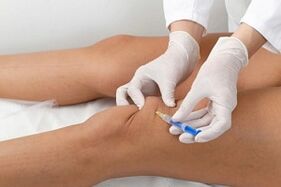
This is a group of drugs that act on cartilage tissue, restoring and nourishing it, improving the quality of the lubricating fluid.
The most effective in the treatment of osteoarthritis of the knee joint are preparations with glucosamine and chondroitin sulfate.These substances are included in various medications.
The attitude of doctors and patients towards chondroprotectors is ambiguous.Some patients, thanks to advertising, expect quick and unrealistic results from the treatment.Not finding them, they become disappointed and begin to consider this group of drugs useless.
In fact, chondroprotectors require long-term use in combination with other treatment methods.
These drugs are much more effective in stages 1-2 of the disease and not when the cartilage tissue is already severely damaged.
hyaluronic acid
Sodium hyaluronate is a natural moisturizing component that is produced in the human body.With intra-articular injections, hyaluronic acid deeply nourishes dry, thinning cartilage, restores joint mobility and acts as an effective natural lubricant.The disadvantages of the method include the undesirability of its use during periods of exacerbation, inflammation and high price.At the same time, a well-designed treatment with hyaluronic acid can replace surgical intervention, which can be even more expensive.
Ointments
Gels and ointments with analgesic and anti-inflammatory effects cannot affect the cause of the disease, but can greatly alleviate the patient's condition.Hot preparations improve blood circulation, improve nutrition of the diseased area and help general treatment.Non-steroidal anti-inflammatory ointments are widely used to relieve pain, despite the relatively small amount of active substance that can penetrate the skin to the joint.
Diet therapy
Scientists have been studying the relationship between the consumption of certain foods and osteoarthritis of the joints for many years.It has been suggested that the increased risk of morbidity is influenced by the consumption of meat, processed foods and excess salt, but these conjectures have not been confirmed.The only thing that has to do with diet and osteoarthritis is excess weight.Therefore, the principles of diet therapy for this diagnosis are based on the general rules of healthy eating, as well as the reduction and control of body weight.
Recommendations for patients with knee osteoarthritis:
- Limit the consumption of prepared food, fast food and give preference to homemade dishes made with simple products.
- Stay within the healthy norm of salt intake: no more than 1 teaspoon per day.
- Limit sweets, fatty foods, carbonated drinks and flour products.
- The diet should be varied, most of it should consist of fruits, vegetables, cereals, dairy products, nuts, eggs (especially protein) and lean meats.
- On the recommendation of your doctor, you can take a complex of vitamins and dietary supplements.
If a patient with knee osteoarthritis is already overweight, he or she should consult a nutritionist.The specialist will be able to give advice based on the patient's age, lifestyle and other indicators.
Folk remedies for the treatment of osteoarthritis.
In folk medicine, infusions, decoctions, compresses from medicinal herbs and other components are used for the treatment of joints.With the doctor's permission, these medications can complement the main treatment or be used to prevent gonarthrosis at the first signs of discomfort and osteoarthritis of the knee joint.
Several popular recipes:
- Turpentine rubbing.Mix the yolk, a teaspoon of turpentine, a tablespoon of apple cider vinegar.Rub the mixture on the affected area overnight, wrapping it in a woolen cloth.Use 1-2 times a week.
- Honey and mumiyo.For 100 g of honey it is necessary to add 3-4 g of mumiyo.Rub your knees before going to bed.
- Dandelion infusion.To prepare half a liter of alcohol or vodka, pour it into a dark glass container.Fill it with yellow heads and leave it in a cool place for at least a month.Rub the strained product on the sore area before going to bed.
These recipes help relieve pain and inflammation in complex treatments, but do not replace them.Self-medication by illiterate people can worsen their condition.
massage
Manual and hardware massage, manual therapy are perfect for overweight, sedentary people and people with osteoarthritis.If there is excessive fluid accumulation in the joint, lymphatic drainage is indicated.All types of massage go well with physiotherapy and are used to relax muscles after training.Contraindications for massage are acute inflammation.
Physiotherapy
Numerous types of procedures that use heat, cold, electric current, ultrasound and laser rays slow down the progression of osteoarthritis, improve blood circulation in the diseased area and have an anti-inflammatory and analgesic effect.
Most often the doctor prescribes:
- Shock wave therapy.The method consists of specially directing sound waves to the diseased joint area.This effect relieves swelling, improves cartilage nutrition and destroys salt deposits.The most effective method of physiotherapy for osteoarthritis.
- Myostimulation.Electrical impulses relieve muscle spasms and tension and maintain mobility of the knee joint.
- Phonophoresis.This therapy combines the local effects of ointments and gels with ultrasound.Due to this, the penetration of beneficial substances into the skin increases.
Cryotherapy, paraffin therapy, laser therapy, magnetic therapy and other techniques are used less frequently.
Kinesitherapy
Popular techniques include physical therapy and joint traction.The exercise therapy complex is prescribed individually by a rehabilitation doctor.May include weight-bearing exercises, medical devices, and gymnastics for independent performance.Some exercises should be done in the morning, while you are still in bed, others - 3 or 4 times a day.The effectiveness of therapeutic exercises largely depends on the patient's responsibility and desire to recover.When done correctly, such physical training helps stop deterioration and prevent surgery.
A special orthotic device is used for traction.The method allows you to widen the gap between the joints, reduce their friction and the load on the sore knee.
Surgical treatment
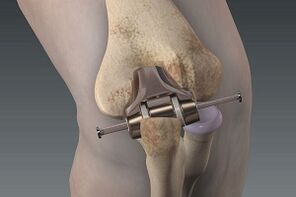
Surgery for osteoarthritis is a method of influencing the cause of the disease and not just the symptoms.It is used in stages 2-3 of osteoarthritis, when other methods are ineffective.There are several intervention options:
- Arthroscopy.Modern methods allow the operation to be performed through small incisions with thin instruments under the supervision of a video camera.This type of surgery is easier to tolerate and recovery is faster.During the operation, the surgeon removes pieces of destroyed cartilage and tissue fibers.
- Puncture.It refers to low-traumatic interventions.It consists of pumping excess fluid from the joint with a syringe.It allows you to relieve swelling, inflammation and increase mobility.
- Endoprosthesis.If in the last stage of osteoarthritis the joint is already very damaged, it can be replaced with a titanium one that is compatible with the body.This is the most extensive intervention, followed by long-term rehabilitation.They turn to him in the most difficult cases, when there are no other options.
To avoid surgery, it is necessary to monitor your health and start treating diseases from the beginning.It is not necessary to endure years and drown the pain in the knee joint and other signs of osteoarthritis with painkillers.
Preventive measures for osteoarthritis of the knee joint.
It is necessary to start taking care of the health of your knee joints from the beginning.The older you are, the more preventive measures you will need to take.Athletes and overweight people should pay special attention to the musculoskeletal system.
To prevent osteoarthritis of the knee joint, it is necessary:
- Choose sports and loads correctly, depending on your capabilities.
- Wear comfortable, good quality shoes with low heels.
- Swimming, which evenly tenses and relaxes all muscles and joints.
- Avoid joint injuries and complete your treatment.
- Avoid excessive weight gain and keep it normal.
In addition to lifestyle adjustments, timely treatment of congenital features of joint development, for example, various deformities and dislocations, is important.
Osteoarthritis of the knee joint can occur not only in elderly patients but also in young patients.The disease takes a long time to develop and with the right approach it is possible to recover and avoid serious health consequences.